Can you forget how do you swallow?
By David Wilson
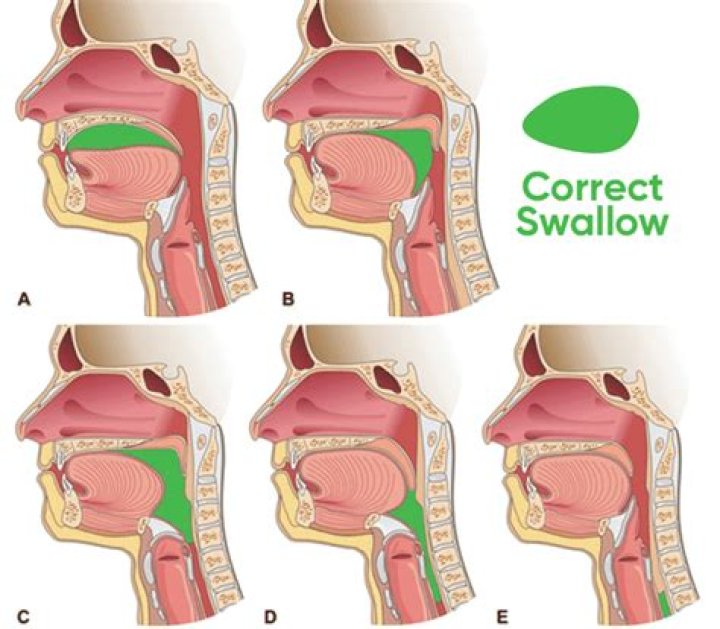
Problems during swallowing can range from coughing or choking because the food or liquid enters the windpipe to complete inability to swallow anything at all. Disorders of the brain or nervous system, like a stroke, or weakening of the muscles in the throat or mouth can cause someone to forget how to swallow.
Can you forget how do you swallow with dementia?
As dementia progresses it affects the area of the brain that controls swallowing. In advanced dementia the person may have a weak swallow or lose the ability to swallow safely.Why can't I swallow when I think about it?
Stress or anxiety may cause some people to feel tightness in the throat or feel as if something is stuck in the throat. This sensation is called globus sensation and is unrelated to eating. However, there may be some underlying cause. Problems that involve the esophagus often cause swallowing problems.Can you control your swallowing?
Swallowing exercises can improve the strength, mobility, and control of these muscles. Over time, they may help you to swallow normally again. A speech-language pathologist (SLP) may prescribe swallowing exercises to improve your swallowing. The exact exercises will depend on why you are having trouble swallowing.Why do I forget how do you swallow?
Disorders of the brain or nervous system, like a stroke, or weakening of the muscles in the throat or mouth can cause someone to forget how to swallow. Other times, difficulty swallowing is a result of a blockage in the throat, pharynx, or esophagus, or narrowing of the esophagus from another condition.Here's What Happens In Your Body When You Swallow Gum | The Human Body
Can anxiety affect swallowing?
Anxiety and tension can cause the throat muscles to constrict, feeling to some like "a lump in the throat." Those who fear swallowing may find themselves physically unable to do so once they become too anxious.What is a swallow test?
A swallow test is usually carried out by a speech and language therapist (SLT) and can give a good initial assessment of your swallowing abilities. The SLT will ask you to swallow some water. The time it takes you to drink the water and the number of swallows required will be recorded.How do I cure my fear of swallowing?
Many people find that excessive chewing and swallowing each bite with a large sip of liquid can help to ease their symptoms. Those with a more severe fear, however, may need to resort to shakes, baby food, and purees, or even subsist on a liquid diet.How can I relax my throat anxiety?
How to relax the throat muscles quickly
- Bring awareness to the breath. ...
- Next, place a hand on the belly and relax the shoulders. ...
- Exhale fully, allowing the belly to relax again. ...
- Keep breathing this way, feeling the hand rising and falling with each breath.
- If helpful, people can make a soft “sss” sound as they exhale.
When should I be worried about trouble swallowing?
You should see your doctor to determine the cause of your swallowing difficulties. Call a doctor right away if you're also having trouble breathing or think something might be stuck in your throat. If you have sudden muscle weakness or paralysis and can't swallow at all, call 911 or go to the emergency room.What stage of dementia is dysphagia?
Dementia progresses differently in each person, so it can be difficult to know what to expect and when. However, dysphagia often presents in late-stage dementia patients who tend to have difficulty communicating and may even be nonverbal.What are the signs that a person may have dysphagia?
Signs and symptoms associated with dysphagia can include: Pain while swallowing. Inability to swallow. A sensation of food getting stuck in the throat or chest or behind the breastbone (sternum)How long does throat anxiety last?
If your body was previously in a heightened state of anxiety or in an active stress response, it may take a moment for your body to return to a state of calmness. When your body returns to a state of peace, the lump in the throat feeling will subside, but it may take up to 15 to 20 minutes.What does throat anxiety feel like?
Anxiety. When anxiety makes your throat feel tight or makes you feel like you have something stuck in your throat, the feeling is called “globus sensation.”Does anxiety affect your throat?
When you feel anxious, your body releases adrenaline and cortisol. Besides causing your heart rate and blood pressure to increase, these hormones can also cause you to take rapid, shallow breaths through your mouth. Your muscles can also tense up. This can lead to a sore or tight throat.What is Hippopotomonstrosesquippedaliophobia?
Hippopotomonstrosesquippedaliophobia is one of the longest words in the dictionary — and, in an ironic twist, is the name for a fear of long words. Sesquipedalophobia is another term for the phobia. The American Psychiatric Association doesn't officially recognize this phobia.How can I improve my swallowing reflex?
As example, you may be asked to:
- Inhale and hold your breath very tightly. ...
- Pretend to gargle while holding your tongue back as far as possible. ...
- Pretend to yawn while holding your tongue back as far as possible. ...
- Do a dry swallow, squeezing all of your swallowing muscles as tightly as you can.
What conditions might affect the ability to swallow?
Muscular conditions
- scleroderma – where the immune system (the body's natural defence system) attacks healthy tissue, leading to a stiffening of the throat and oesophagus muscles.
- achalasia – where muscles in the oesophagus lose their ability to relax and open to allow food or liquid to enter the stomach.
Does swallowing get more difficult with age?
But swallowing difficulty can also be associated with aging. In fact, it has been estimated that as many as 20% of individuals over the age of 50 years, and most individuals by the age of 80 years, experience some degree of swallowing difficulty.Who tests for swallowing problems?
If you are having trouble swallowing, your health care provider may refer you to one of the following specialists: Speech and language pathologist, a health care provider that specializes in diagnosing and treating speech, language, and communication disorders.Can depression cause swallowing problems?
Dysphagia can be found in anxiety, depression and conversion hysteria, with high incidence in the urban population of the third world countries. However, several professionals are unaware of these disorders.Can tight neck muscles affect swallowing?
Cervical instability in the neck has been linked to swallowing difficulties, diagnosed as cervicogenic dysphagia. Cervical instability has been linked to cervical spine nerve compression which can be an “unseen” cause of swallowing difficulties, esophageal spasms, and acid reflux.How do I get rid of Globus anxiety?
What can I do to help ease my symptoms?
- Drink more water, a minimum of 1.5 litres (3 pints) per day in addition to any tea/coffee/cola. ...
- Avoid drinking more than 4 cups of coffee/tea/cola per day. ...
- Stop any bad habits, such as shouting, raising your voice or throat clearing (swallow instead).