How do you stay calm during a Code Blue?
By Sarah Rowe
Stay calm and resuscitate on: Tips to keep your cool during a patient emergency
- Know where your equipment is. ...
- Press that button. ...
- Keep going back to CPR. ...
- Think of the defibrillator as a dear friend. ...
- Have a job you feel comfortable with. ...
- Practice closed-loop communication. ...
- Practice with coworkers. ...
- Ask the question.
How do nurses stay calm in a medical emergency?
Take a short walk around the facility and practice long, deep breaths in order to steady your stress levels and calm your heart rate. Knowing when to take a quick break might be the most important method of staying calm as a nurse.How do you deal with code blue?
– Manage airway by using an ambu bag or a pocket mask with one-way valve. – Switch role with the first responder in giving chest compressions to the patient. – Turn on the AED/defibrillator and use it for pulseless patients. – Ensure that IV fluids and emergency medications are ready for use of the Code Team.What skill can you use to remain calm and aware in a medical emergency?
Clear communication is essential in an emergency situation. If you're in a patient emergency situation, you should be speaking or listening at all times – ask other nurses or doctors what they need you to do, state what you're doing, ask others if they have performed basic tasks (Have you started the IV?Can you survive code blue?
According to a large study in the The New England Journal of Medicine in 2013, only one in six patients who experience a code blue will survive to hospital discharge and some will have permanent neurologic disability as a result.Super simple tips on how to stay calm during a code blue
How long do code Blues last?
In my experience, the length of time to continue a code can vary widely and is mostly dependent on the physician running the code. I have seen it last 15 minutes (which is reasonable) and I have seen it last for 50 minutes when the initial rhythm was ventricular fibrillation.What percentage of code blues survive?
Overall survival was 26%. Survival in patients with cardiac arrests was 11.13%. Factors such as age, presenting rhythm, and duration of CPR were found to have a significant effect on survival.How do you stay calm in a high pressure situation?
Here are a few tips for staying calm in stressful situations.
- Breathe. Take a few slow, deep breaths. ...
- Count to 10. In the time it takes you to do so, you may be able to look at your situation with a fresh pair of eyes.
- Take a walk. ...
- Try a 3-Minute Meditation. ...
- Practice gratitude. ...
- Eat well. ...
- Get moving. ...
- Let it go.
How do you not panic in an emergency?
Attempt to inhale deeply, expanding your diaphragm. After 3 seconds or so, pause, then exhale just as slowly. After a moment you'll likely begin to relax. Practise mindfulness – Mindfulness techniques can not only help you relax and reduce stress in day-to-day life, they can also help you calm down in an emergency.How can panic be avoided in an emergency?
Take a step back and try one of these techniques to keep your cool and be more helpful than harmful in an emergency situation.
- Stop what you're doing. Take a deep breath, squeeze all the muscles in your body simultaneously and release as you exhale. ...
- Try breathing exercises. ...
- Visualize.
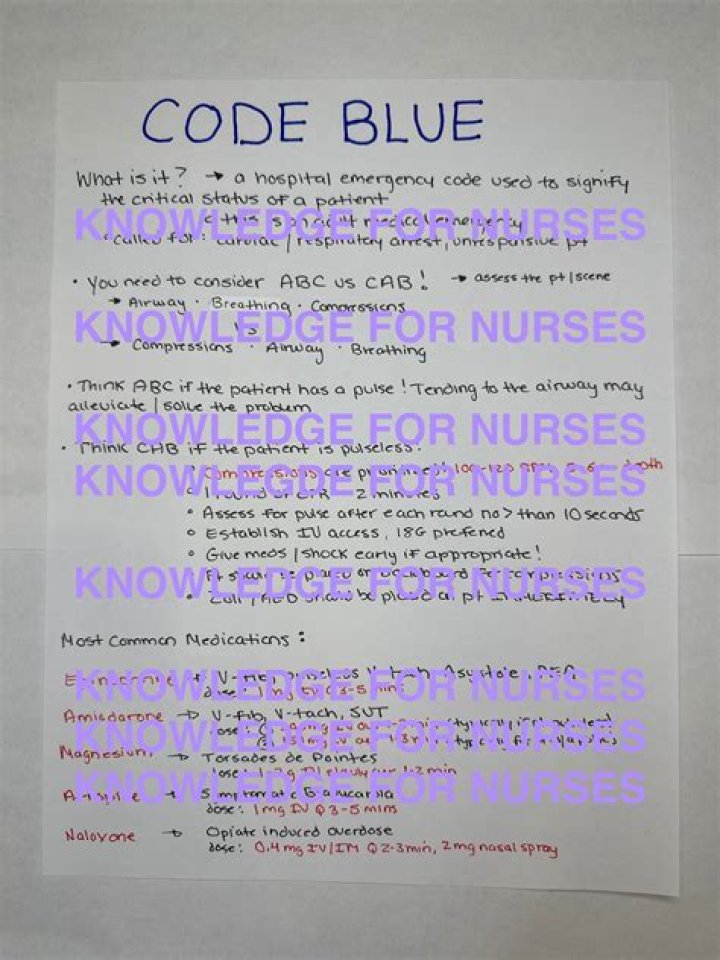
What should a nurse do in a code blue?
Role of Responders During a Code Blue
- Call for help.
- Drop the head of the bed and remove the pillows so the patient is flat on the bed.
- Check the carotid pulse.
- Begin chest compressions.
- Bring the e-cart and other emergency equipment to the site.
- Put the backboard under the patient.
How do nurses deal with code blue?
While awaiting assistance to arrive be aware of the following:
- Consider the person's wishes if they are conscious and coherent.
- Ask people nearby to alert members of Campus Security.
- Administer first aid up to the level of your training.
- If possible, clear any obstructions from the immediate area.
What is the nurses role in a code blue?
Managing a code blue as a nurse includes activating the code, sharing clinical information with the team, performing chest compressions, monitoring, and evaluating the code blue process. A code blue is activated whenever a patient or someone is found unconscious, not breathing or without a pulse.How do doctors remain calm?
One of the most beneficial ways to stay calm is to rehearse for stressful situations. Visualizing potential complications for surgeries and other procedures, along with your responses to them, will help you prepare for real-life problems.How do you stay calm in nursing school?
Here are some simple self-care activities you can try to alleviate nursing school stress:
- Take a soothing bath. ...
- Try yoga. ...
- Meditate. ...
- Listen to your favorite podcast.
- Sit outside for a few minutes.
- Bake or cook a meal from scratch.
- Lay down and turn on your favorite music.
- Read an excellent non-school book.
How do first responders stay calm?
Coping techniques like taking breaks, eating healthy foods, exercising, and using the buddy system can help prevent and reduce burnout and secondary traumatic stress. Recognize the signs of both of these conditions in yourself and other responders to be sure those who need a break or need help can address these needs.What should you not do in an emergency?
- Don't call 911 unless there is a life-threatening emergency. ...
- Don't drink, eat, or smoke anything during an emergency from a chemical source or unknown explosion until you are out of harm's way.
- Don't go anywhere except to your designated meeting place after escaping from an emergency scene.