
How long does it take to get the results of a biopsy?
By David Wilson
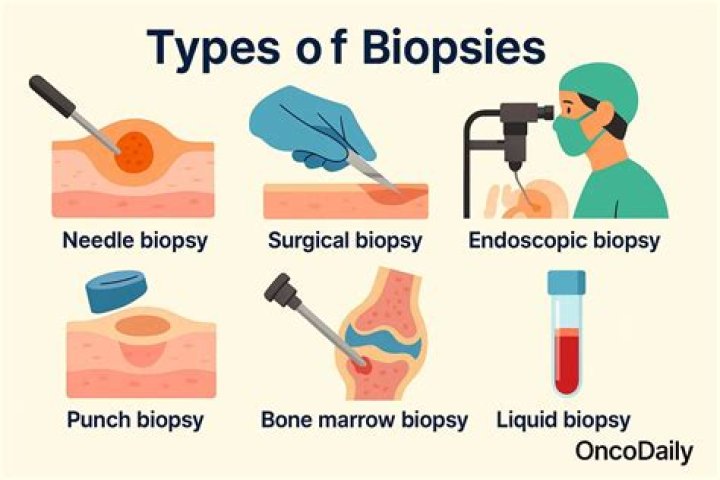
Getting your biopsy results
The results, called a pathology report, may be ready as soon as 2 or it may take as long as 10 days. How long it takes to get your biopsy results depends on how many tests are needed on the sample.Do biopsy results take longer if it's cancer?
If your pathologist suspects certain types of cancer, such as lymphoma, he or she might need to perform additional testing to determine the subtype. This process takes an additional 24 to 96 hours, depending on the complexity of the cancer. It can be agonizing to wait for biopsy results.What is the average wait time for biopsy results?
How long does it take to get a pathology report? A result can often be given within 2 to 3 days after the biopsy. A result that requires a more complicated analysis can take 7 to 10 days. Ask your doctor how you will receive the biopsy results and who will explain them to you.Does a biopsy tell you what stage cancer is?
The biopsy results help your health care provider determine whether the cells are cancerous. If the cells are cancerous, the results can tell your care provider where the cancer originated — the type of cancer. A biopsy also helps your care provider determine how aggressive your cancer is — the cancer's grade.Can you get biopsy results right away?
Routine biopsy and cytology results may be ready as soon as 1or 2 days after the sample gets to the lab. But there are many reasons some take much longer to complete.How long does it take to get a Biopsy result? - Dr. Sanjeev Katti
What happens if biopsy report is positive?
Another important factor is whether there are cancer cells at the margins, or edges, of the biopsy sample. A “positive” or “involved” margin means there are cancer cells in the margin. This means that it is likely that cancerous cells are still in the body. Lymph nodes.Do doctors call with negative biopsy results?
If a normal or negative test result comes back, the physician can telephone the patient with the “good news,” and patients have the option of canceling the follow-up appointment. Although it is preferable to give bad news face-to-face, there may be times when giving bad news over the phone is unavoidable.Do doctors tell you if they suspect cancer?
Doctors need the information about grade and stage to plan your treatment. It may take a few days before your doctor has the results of all the tests. They will then be able to tell you whether you have cancer, and talk with you about your treatment options.What are the symptoms of Stage 1 cancer?
What are some general signs and symptoms of cancer?
- Fatigue or extreme tiredness that doesn't get better with rest.
- Weight loss or gain of 10 pounds or more for no known reason.
- Eating problems such as not feeling hungry, trouble swallowing, belly pain, or nausea and vomiting.
- Swelling or lumps anywhere in the body.
How do I cope with waiting for biopsy results?
While you wait for your biopsy results
- Stay busy. Keep your normal routine. Do things you enjoy.
- Talk with your family and friends. Use your support system. ...
- Get informed. Learn about possible results and potential next steps from trusted organizations like Susan G.
Can you tell if a tumor is benign without a biopsy?
Benign tumors can grow but do not spread. There is no way to tell from symptoms alone if a tumor is benign or malignant. Often an MRI scan can reveal the tumor type, but in many cases, a biopsy is required. If you are diagnosed with a benign brain tumor, you're not alone.Is a negative biopsy good?
Although tests aren't 100% accurate all the time, receiving a wrong answer from a cancer biopsy – called a false positive or a false negative – can be especially distressing. While data are limited, an incorrect biopsy result generally is thought to occur in 1 to 2% of surgical pathology cases.How will I get my biopsy results?
Your GP, hospital consultant or practice nurse will give you your results and explain what they mean. A biopsy is sometimes inconclusive, which means it hasn't produced a definitive result. In this case, the biopsy may need to be repeated, or other tests may be required to confirm your diagnosis.How do doctors tell you you have cancer?
In most cases, doctors need to do a biopsy to diagnose cancer. A biopsy is a procedure in which the doctor removes a sample of tissue. A pathologist looks at the tissue under a microscope and runs other tests to see if the tissue is cancer.Can cancer be diagnosed without a biopsy?
But for most cancer types, a cancer diagnosis isn't a diagnosis until a biopsy says it is — and everything that follows hinges on that biopsy. A biopsy is a procedure that collects a sample of tissue or cells from a suspicious area, mass or lymph node for examination and testing by a pathologist.Can a biopsy spread cancer?
— A study of more than 2,000 patients by researchers at Mayo Clinic's campus in Jacksonville, Florida, has dispelled the myth that cancer biopsies cause cancer to spread.What are 3 warning signs of cancer?
Warning Signs of Cancer
- Unexplained weight loss.
- Fatigue.
- Night sweats.
- Loss of appetite.
- New, persistent pain.
- Recurrent nausea or vomiting.
- Blood in urine.
- Blood in stool (either visible or detectable by special tests)
What are the 5 warning signs of cancer?
But to be safe, talk to your doctor about these five signs and symptoms.
- Unexplained Weight Loss. When you lose weight for no reason, call your doctor. ...
- Fatigue. This isn't fatigue similar to how you feel after a long day of work or play. ...
- Fever. ...
- Pain. ...
- Skin Changes.