Is SSDI considered SSI?
By Ava Hall
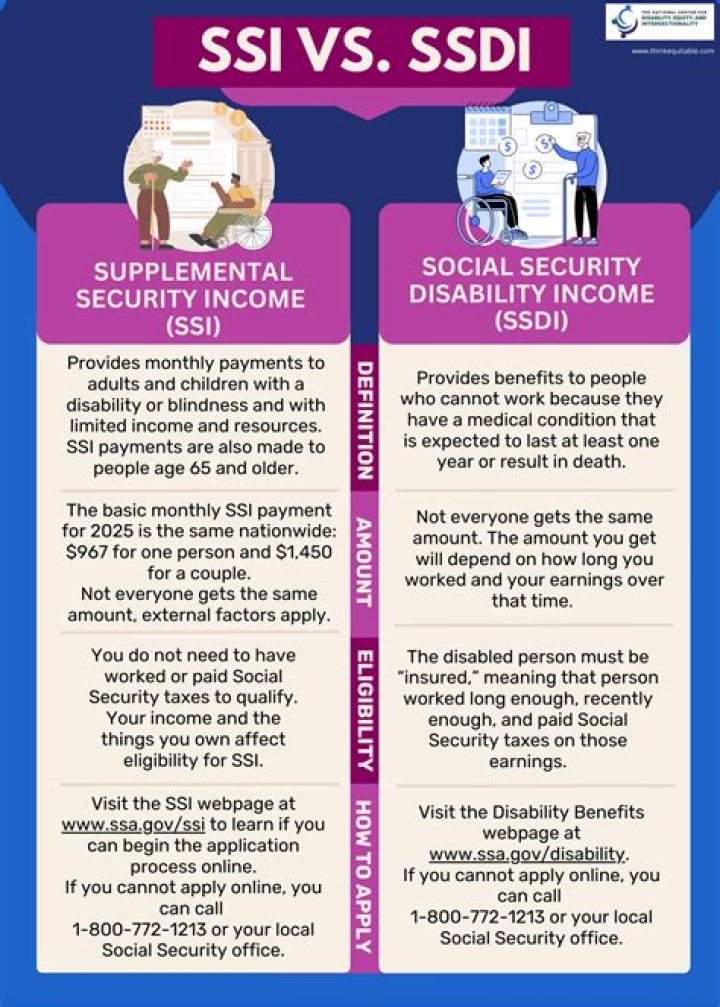
The major difference is that SSI determination is based on age/disability and limited income and resources, whereas SSDI determination is based on disability and work credits. In addition, in most states, an SSI recipient will automatically qualify for health care coverage through Medicaid.
Is SSDI considered Social Security benefits?
Social Security Disability Insurance (SSDI) is a social insurance program under which workers earn coverage for benefits, by working and paying Social Security taxes on their earnings. The program provides benefits to disabled workers and to their dependents.Is there a difference between SSI and Social Security benefits?
Social Security benefits may be paid to you and certain members of your family if you are “insured” meaning you worked long enough and paid Social Security taxes. Unlike Social Security benefits, SSI benefits are not based on your prior work or a family member's prior work.Can you receive both SSI and SSDI?
Many individuals are eligible for benefits under both the Social Security Disability Insurance (SSDI) and Supplemental Security Income (SSI) programs at the same time. We use the term “concurrent” when individuals are eligible for benefits under both programs.Is it easier to get SSI or SSDI?
SSDI is the easier of the two to apply for, and you can do so online at SSI is slightly more complicated, so you'll need to apply in person at your local Social Security office or over the phone.What Is The Difference Between SSDI & SSI? | Citizens Disability
Which pays more SSDI or SSI?
In general, SSDI pays more than SSI. Based on data from 2020: The average SSDI payment is $1,258 per month. The average SSI payment is $575 per month.What are the 3 types of Social Security?
Social Security Benefits: Retirement, Disability, Dependents, and Survivors (OASDI)What are the two types of Social Security disability?
The Social Security Administration (SSA) offers two types of disability benefits: Social Security Disability Insurance (SSDI) and Supplemental Security Income (SSI).At what age does Social Security disability stop?
When you reach the age of 65, your Social Security disability benefits stop and you automatically begin receiving Social Security retirement benefits instead. The specific amount of money you receive each month generally remains the same.What's the difference between SSD and SSDI?
Social Security Disability Insurance, also known as SSD or SSDI, provides benefits to disabled or blind persons who have previous workers' contributions to Social Security. These are the facts about SSDI. You must meet Social Security's disability criteria. Benefits are based on earnings records.How much does SSDI pay in 2021?
While SSDI is valuable to many, applicants need to carefully consider the program before applying. The maximum disability you can receive in 2021 is $3,148 per month. However, the average recipient will likely receive an amount of around $1,277 per month.Will my disability benefits change when I turn 65?
The Benefits Do ConvertNothing will change. You will continue to receive a monthly check and you do not need to do anything in order to receive your benefits. The SSA will simply change your disability benefit to a retirement benefit once you have reached full retirement age.
What is the monthly amount for Social Security disability?
SSDI payments range on average between $800 and $1,800 per month. The maximum benefit you could receive in 2020 is $3,011 per month. The SSA has an online benefits calculator that you can use to obtain an estimate of your monthly benefits.What is the most approved disability?
1. Arthritis. Arthritis and other musculoskeletal disabilities are the most commonly approved conditions for disability benefits. If you are unable to walk due to arthritis, or unable to perform dexterous movements like typing or writing, you will qualify.At what age does SSDI change to SSI?
Individuals who qualify for Social Security Disability Insurance (SSDI) can expect to see quite a change when they turn 65. At that age, SSDI benefits are converted to traditional Social Security benefits.Can you switch from SSI to SSDI?
Don't Forget: Some SSI Beneficiaries Can Switch to SSDI When a Parent's Circumstances Change. Because of her disability, a person receiving SSI may not have worked long enough to qualify for Social Security Disability Insurance (SSDI) benefits on her own work record.Why did I get approved for SSI and not SSDI?
The major difference is that SSI determination is based on age/disability and limited income and resources, whereas SSDI determination is based on disability and work credits. In addition, in most states, an SSI recipient will automatically qualify for health care coverage through Medicaid.Is Social Security getting a $200 raise per month?
Bernie Sanders have introduced the Social Security Expansion Act. The plan includes an increased cost-of-living adjustment for seniors, an extension of the program to 2096 and those who qualify to get $200 more per month.What are the cons of being on disability?
The Disadvantages of Social Security Disability
- Proof of Disability. Unlike other government programs SSDI does not give benefits for partial disability. ...
- Past Work History Required. ...
- Delay in Benefits and Case Reviews. ...
- Benefits Can Be Taxed.