
What are the beginning stages of sepsis?
By James Stevens
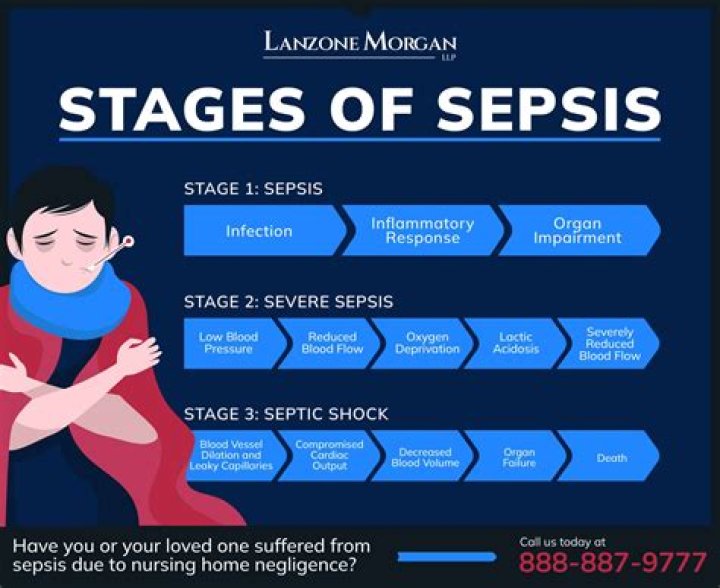
Early symptoms include fever and feeling unwell, faint, weak, or confused. You may notice your heart rate and breathing are faster than usual. If it's not treated, sepsis can harm your organs, make it hard to breathe, give you diarrhea and nausea, and mess up your thinking.
What are the early warning signs of sepsis?
The signs and symptoms of sepsis can include a combination of any of the following:
- confusion or disorientation,
- shortness of breath,
- high heart rate,
- fever, or shivering, or feeling very cold,
- extreme pain or discomfort, and.
- clammy or sweaty skin.
What are the 4 stages of sepsis?
The three stages of sepsis are: sepsis, severe sepsis, and septic shock.
...
Stage 1 Sepsis
- A fever above 101 degrees Fahrenheit or a temperature below 96.8 degrees Fahrenheit.
- Rapid breathing (more than 20 breaths per minute)
- Rapid heart rate (more than 90 beats per minute)
- Confirmed infection.
What is stage1 sepsis?
Stage one: Systemic Inflammatory Response Syndrome (SIRS)Sepsis can be hard to identify, but is typically denoted by a very high or low body temperature, high heart rate, high respiratory rate, high or low white blood cell count and a known or suspected infection.
What are the 5 signs of sepsis?
Sepsis Symptoms
- Fever and chills.
- Very low body temperature.
- Peeing less than usual.
- Fast heartbeat.
- Nausea and vomiting.
- Diarrhea.
- Fatigue or weakness.
- Blotchy or discolored skin.
An introduction to the SEPSIS pathway (detect it early and treat it early)
Does sepsis come on suddenly?
But sepsis is one of the top 10 causes of disease-related death in the United States. The condition can arise suddenly and progress quickly, and it's often hard to recognize. Sepsis was once commonly known as “blood poisoning.” It was almost always deadly.What are the three most common causes of sepsis?
Bacterial infections are the most common cause of sepsis. Sepsis can also be caused by fungal, parasitic, or viral infections.How quickly does sepsis progress?
When treatment or medical intervention is missing, sepsis is a leading cause of death, more significant than breast cancer, lung cancer, or heart attack. Research shows that the condition can kill an affected person in as little as 12 hours.What is mild sepsis?
Sepsis happens when an infection you already have triggers a chain reaction throughout your body. Infections that lead to sepsis most often start in the lung, urinary tract, skin, or gastrointestinal tract. Without timely treatment, sepsis can rapidly lead to tissue damage, organ failure, and death.Can you have sepsis for months and not know it?
It's clear that sepsis doesn't occur without an infection in your body, but it is possible that someone develops sepsis without realizing they had an infection in the first place. And sometimes, doctors never discover what the initial infection was.What are the 6 signs of sepsis?
These can include:
- feeling dizzy or faint.
- a change in mental state – such as confusion or disorientation.
- diarrhoea.
- nausea and vomiting.
- slurred speech.
- severe muscle pain.
- severe breathlessness.
- less urine production than normal – for example, not urinating for a day.
Can sepsis go away on its own?
Sepsis needs treatment in hospital straight away because it can get worse quickly. You should get antibiotics within 1 hour of arriving at hospital. If sepsis is not treated early, it can turn into septic shock and cause your organs to fail.Who does sepsis most commonly appear in?
Most often, sepsis occurs in people who are hospitalized or who have recently been hospitalized. People in an intensive care unit are more likely to develop infections that can then lead to sepsis. Any infection, however, could lead to sepsis.How do you detect sepsis?
Doctors diagnose sepsis using a number of physical findings such as:
- Fever.
- Low blood pressure.
- Increased heart rate.
- Difficulty breathing.
How can you tell if your body is fighting an infection?
Signs of infection
- fever.
- feeling tired or fatigued.
- swollen lymph nodes in the neck, armpits, or groin.
- headache.
- nausea or vomiting.
What does sepsis look like on the skin?
People with sepsis often develop a hemorrhagic rash—a cluster of tiny blood spots that look like pinpricks in the skin. If untreated, these gradually get bigger and begin to look like fresh bruises. These bruises then join together to form larger areas of purple skin damage and discoloration.What antibiotics treat sepsis?
“This includes ceftriaxone, azithromycin, ciprofloxacin, vancomycin, and piperacillin-tazobactam.” If you have mild sepsis, you may receive a prescription for antibiotics to take at home. But if your condition progresses to severe sepsis, you will receive antibiotics intravenously in the hospital.What bacteria causes sepsis?
All sepsis-causing bacteria (Staphylococcus aureus, Streptococcus pneumoniae, Haemophilus influenzae, Neisseria meningitidis, Klebsiella pneumoniae, Escherichia coli, group B streptococci, etc.) have polysaccharide capsules on their surface.Who is most vulnerable to sepsis?
Who's more likely to get sepsis
- babies under 1, particularly if they're born early (premature) or their mother had an infection while pregnant.
- people over 75.
- people with diabetes.
- people with a weakened immune system, such as those having chemotherapy treatment or who recently had an organ transplant.