What skills are needed to become a welder?
By Sarah Rowe
Skills Needed to Be a Good Welder – Do You Have What It Takes?
- Mathematical Skills. You need relatively good math skills to be a great welder. ...
- Attention to Detail. ...
- Steady Hands and Good Hand-Eye Coordination. ...
- Physical Strength and Endurance. ...
- The Ability to Always Learn New Things. ...
- Good Communication and Teamwork Abilities.
What skill do you need to be a welder?
What types of skills do welders need? To complete the day-to-day tasks described above, welders need a strong knowledge of welding and metal properties. They must be able to read and interpret technical documents, blueprints, and drawings.What skills and education do you need to be a welder?
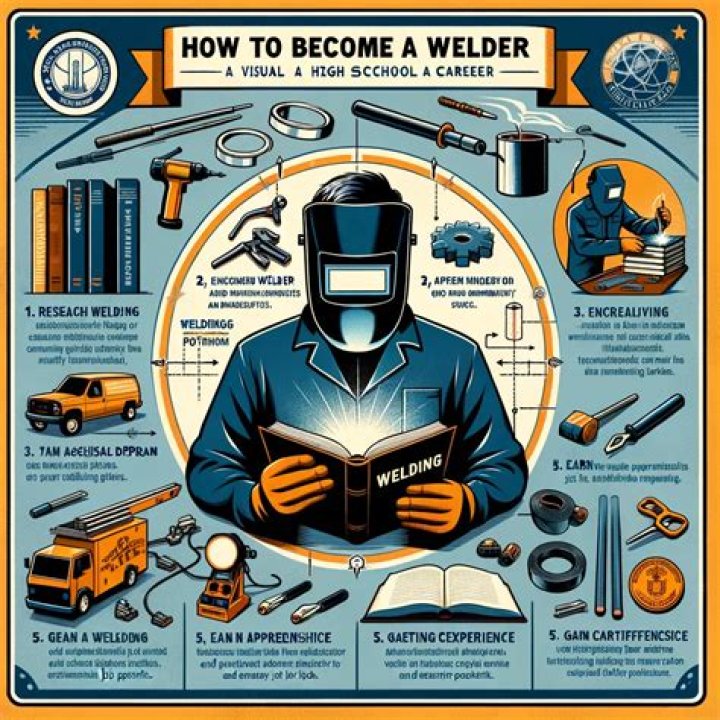
Welders may need a high school diploma or equivalent at minimum, but most attend technical school or community college programs to learn their trade, and employers prefer those with certification. On-the-job experience is just as important, and it's typically attained by working for several years as an apprentice.How strong do you have to be to be a welder?
For this reason, strength and physical stamina can be important to welding. Welders typically must be strong enough to lift and handle heavy materials. Welding is a physical job, so being in good physical condition, and able to bend, stoop or reach while working is generally considered to be helpful.How much do welders make an hour?
The average salary for a welder is $17.90 per hour in the United States.BEFORE YOU DECIDE TO BECOME A WELDER
What are soft skills for welding?
Here are five soft skills which will help you to land a top job in your welding career.
- Curious Problem-Solvers are Well Suited to a Welding Career. ...
- Strong Math Skills are a Useful Addition to a Welder's Skillset. ...
- Strong Communication Will Please Your Colleagues and Clients.
What math do you need for welding?
A welder must be familiar with fractions, decimals, geometry, formulas and trigonometry. With these math skills, a welder can make strong welds regardless of the type of material used. However, knowing the melting point of a metal is only one useful math skill in the welder's arsenal.Is welding a good career choice?
Many businesses are looking for skilled welders and you can consider it one of the more secure jobs available. Striving towards safety awards and bettering your skills can also be high on your list. Welding may not be the choice for everyone, but for those interested, it can be a lucrative, rewarding career to have.Do all welders go blind?
When welders don't properly protect their eyes from the arc, they commonly suffer welder's flash, or photokeratitis, a condition caused by exposure to intense ultraviolet radiation resulting in temporary blindness and extreme discomfort. More extreme eye injuries can result in permanent blindness.Does welding shorten your life?
To be fair, yes, welding does shorten your longevity. On average, a welder can have a life expectancy of about 40 to 50 years, given the severe risks and health hazards of welding. So, if you are thinking of choosing welding as your career choice, you must be well aware of all the ins and outs of welding.Why are welders so angry?
They get so immersed in their own little universe, which centers on the bright light they are staring at, that they get easily startled and aggressive if you fail to approach them slowly and noisily-very much like a grizzly bear or a diamond back rattle snake, both of which can be aggressive if startled or surprised.How smart do you have to be to be a welder?
In short, today's welder needs to know a bit of math, science, physics, metallurgy, and theory, in order to wield an arc or a torch. This is actually good news, as a more skilled work force is often better compensated for their labor than less well-trained workers.Is welding hard to learn?
For most people, welding is moderately to very difficult to learn how to do, as it's a hands-on skill that requires more than just reading. Furthermore, welding is very difficult to actually do for most people, because it takes years and years of practice, on top of learning how to do it.Can you weld wood?
Welding of wood, which relies on the heat generated via friction, can be used for bonding two or more solid wood pieces together. The process can be carried out either by linear or rotational wood welding.How can I be a welder?
The most common route to becoming a Welder is to sign up for an apprenticeship. However, Welding course in welding can be taken independently, including the Certificate in Welding and are a great way to break into the industry. A degree will generally not be necessary.What is skilled welding?
'. Although everyone has their own opinion, most would agree that being a skilled welder involves experience in multi-arc welding processes or aka combination welder.How can I improve my welding skills?
Putting to practice any of these tips is likely to improve the quality and durability of your weld.
- Clean, Clean, Clean. ...
- Get a Great Ground. ...
- Keep Your Stickout Short. ...
- Use Both Hands. ...
- Listen To Your Welder. ...
- Keep The Arc Up Front. ...
- Match Drive Rolls, Gun Cable Liner, Contact Tip to the Wire Size. ...
- Push or Pull.